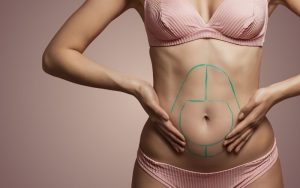
A flatter, firmer midsection is one of the most common goals people bring to a plastic surgeon’s consulting room and one of the most misunderstood.
Diet and exercise can reduce fat, but they cannot tighten skin that has lost its elasticity after pregnancy, significant weight loss or simply the passing of years.
They also cannot repair abdominal muscles that have separated down the middle, a condition known as rectus diastasis.
That is where abdominoplasty helps. What surprises most people is that this is not a single operation. There are several distinct types of tummy tucks, each designed for a different pattern of loose skin, fat distribution and muscle laxity.
The right choice depends far less on what you have seen online and far more on your anatomy, your medical history and what you want your abdomen to look and feel like afterwards.
Why one operation cannot suit every abdomen?
Two people can describe the same complaint, “my stomach won’t go flat”, and need entirely different procedures. Surgeons assess four things before recommending any of the types of tummy tucks:
- Where the loose skin sits: above the navel, below it, or across the whole abdomen
- How much excess skin there is, and whether it extends around the flanks and back
- Whether the abdominal muscles have separated and need repairing
- The quality of your skin, your BMI, and whether your weight has been stable
Abdominoplasty consistently ranks among the most frequently performed body contouring operations worldwide in international aesthetic surgery statistics, precisely because surgeons can tailor it to each body.
The six main types of tummy tucks explained
1. Full tummy tuck (traditional abdominoplasty)
The full tummy tuck (traditional abdominoplasty) is the most widely performed option and the benchmark against which the others are measured.
Through a horizontal incision placed low across the lower abdomen, usually within the bikini line, the surgeon removes excess skin and fat from both above and below the navel, tightens separated abdominal muscles with internal sutures, and repositions the belly button so it sits naturally on the newly flattened contour.
Who it suits:
- Women after one or more pregnancies with muscle separation and loose skin
- Patients with excess skin both above and below the navel
- Anyone wanting comprehensive core tightening alongside skin removal
A full tummy tuck (traditional abdominoplasty) is often combined with liposuction of the waist to refine the overall silhouette, an approach commonly referred to as lipoabdominoplasty.
2. Mini tummy tuck
If your concern is limited to a small pouch of skin sitting below the navel the classic “C-section shelf” a mini tummy tuck may be all that is required. The incision is shorter, the navel is left untouched, and muscle repair, if performed at all, is confined to the area beneath it.
What makes the mini tummy tuck appealing:
- A shorter scar and a generally quicker recovery
- Less extensive surgery, often performed under lighter anaesthesia
- Suitable for patients who are already close to their target weight
It is important to be realistic: a mini tummy tuck will not address loose skin above the navel or widespread muscle separation, and choosing it for the wrong anatomy is a common cause of disappointment.
3. Extended tummy tuck
An extended tummy tuck takes the standard incision further, continuing around the hips towards the lower back.
This allows the surgeon to remove skin not only from the front of the abdomen but also from the flanks and love handle area, then redrape the entire region for a smoother transition from waist to hip.
This option is often recommended for:
- Patients who have lost a substantial amount of weight and have laxity extending sideways
- Those whose abdominal skin sags over the hips as well as the front
- Anyone seeking waist definition that a front-only procedure cannot deliver
The trade-off with an extended tummy tuck is a longer scar, though it is designed to be concealed under underwear or swimwear.
4. Fleur-de-lis tummy tuck
Named for its shape, the fleur-de-lis tummy tuck adds a vertical incision up the midline to the usual horizontal one, creating an inverted T. This is the only approach that meaningfully tightens the abdomen from side to side as well as top to bottom.
It is most often considered for:
- Patients following major weight loss or bariatric surgery
- Those with significant horizontal skin excess and a wide abdominal apron
- Cases where a horizontal incision alone would leave visible skin folds
Because the fleur-de-lis tummy tuck leaves a vertical scar on the abdomen, surgeons carefully consider it and reserve it for patients whose excess skin genuinely warrants the additional access.
5. Circumferential tummy tuck (belt lipectomy or lower body lift)
The circumferential tummy tuck (belt lipectomy or lower body lift) is the most extensive body contouring option.
The incision passes right around the torso like a belt, allowing the surgeon to address the abdomen, flanks, lower back, buttocks and outer thighs in a single, coordinated operation.
Typical candidates include:
- Patients with a very large amount of loose skin encircling the trunk after massive weight loss
- Those whose buttocks and outer thigh skin have descended along with the abdomen
- People whose weight has remained stable for at least six to twelve months
Given its scope, a circumferential tummy tuck requires a longer operating time, an overnight hospital stay and a more structured recovery plan, and candidacy is assessed thoroughly beforehand.
6. Reverse tummy tuck
The reverse tummy tuck flips the usual approach. Instead of pulling skin downwards towards a low incision, the surgeon places the incision in the crease beneath the breasts and lifts the upper abdominal skin upwards.
It is a more specialised choice, generally used for:
- Loose skin confined to the upper abdomen, above the navel
- Patients who have already had a previous abdominoplasty with residual upper laxity
- Cases combined with breast surgery, where the incisions can be shared
A reverse tummy tuck is rarely performed in isolation, and your surgeon will explain whether your skin pattern makes you a genuine candidate.
Comparing the types of tummy tucks at a glance
Procedure | Incision | Navel repositioned | Best for |
Full tummy tuck (traditional abdominoplasty) | Low, hip to hip | Yes | Skin and muscle laxity above and below the navel |
Mini tummy tuck | Short, lower abdomen | No | Isolated lower abdominal pouch |
Extended tummy tuck | Extends to the flanks | Yes | Abdomen plus hip and love-handle laxity |
Fleur-de-lis tummy tuck | Horizontal plus vertical | Yes | Significant side-to-side skin excess |
Circumferential tummy tuck (belt lipectomy or lower body lift) | Fully around the torso | Yes | Trunk-wide laxity, including buttocks and thighs |
Reverse tummy tuck | Under the breast crease | No | Upper abdominal skin only |
What recovery looks like?
Recovery varies with the extent of surgery, but a few principles apply across all types of tummy tucks:
- Compression garments are advised for several weeks to facilitate healing and reduce swelling
- Most patients return to desk-based work within two to four weeks, longer for the more extensive procedures
- High-intensity exercise and heavy lifting are paused for six weeks or more, particularly after muscle repair
- Swelling settles gradually, with the final contour becoming apparent over several months
- Scars mature and fade over a year to eighteen months, and scar care is discussed at follow-up
Your surgeon will give you a recovery plan tailored to your procedure, health, and lifestyle. Individual results and healing times differ from person to person.
Questions worth asking at your consultation
- Which of the types of tummy tucks do you recommend for my anatomy, and why not the others?
- Where exactly will my incision sit, and how will it be hidden?
- Will my abdominal muscles need repairing?
- Should liposuction be combined with my procedure?
- What are the risks in my specific case, and how are they managed?
UK-trained expertise for every type of tummy tuck in Dubai Marina
At Aesthetics by King’s College Hospital Dubai, deciding between the different types of tummy tucks is never a rushed conversation.
Our plastic surgeons are trained and practised within Britain’s National Health Service and King’s College Hospital, UK, and they bring that same methodical, evidence-led approach to our clinic on Marina Walk, combining consultant-level surgical expertise with the comfort and discretion of a purpose-built aesthetic destination.
Whether your assessment points towards a mini tummy tuck, a full abdominoplasty or more extensive body contouring, you will receive a clear explanation of your options, an honest view of what surgery can and cannot achieve for you, and continuity of care from your first consultation through to your final follow-up.
With 25 specialities under one roof, any complementary treatment you need sits within the same building and the same standard of care.
FAQs
A proper answer is only possible after an in-person assessment. Your surgeon will look at where and how much excess skin you have, check for muscle separation, and review your weight history and medical background. After that, they will explain which approach suits your body and why other options are not recommended.
Not exactly. A mini tummy tuck is a different operation, not simply a scaled-down one. It addresses skin below the navel only and leaves the belly button in place, so it cannot correct upper abdominal laxity or widespread muscle separation.
Yes. Repairing separated abdominal muscles is a standard component of a full tummy tuck (traditional abdominoplasty) and of the extended and fleur-de-lis approaches. Many patients report improved core support afterwards, although outcomes vary and this is assessed individually.
Most surgeons prefer patients to be at a stable weight before abdominoplasty, particularly for a circumferential tummy tuck or fleur-de-lis tummy tuck, where large volumes of skin are removed. Stable weight both improves the result and reduces the likelihood of further laxity later.
Yes, all abdominoplasty procedures leave scars. Incisions are planned to sit within areas covered by underwear or swimwear wherever the technique allows, and scars soften and fade over twelve to eighteen months with appropriate aftercare.
Frequently, yes. Liposuction, breast surgery and other body contouring procedures are often performed in the same session where it is safe to do so. Suitability depends on your overall health and the combined length of surgery, which your surgeon will discuss with you.
No. Abdominoplasty removes excess skin and a modest amount of fat, and tightens the abdominal wall. It is a contouring operation rather than a method of weight reduction, and it works best as a finishing step after weight has already been lost and stabilised.